Course catalog
Continuing education courses
Continuing education for wastewater operators. Approval and credit differ by state, so the catalog below shows availability for one state at a time.
Each awards 1 hour · $19.00 USD each · All count toward Class 1-4 licenses.
Tap a subject to see its courses.
Safety1
Hydrogen Sulfide: Four Numbers, One Ceiling
Level 1
To equip wastewater operators with a thorough understanding of hydrogen sulfide (H2S) hazards, exposure limits, and safe operating practices to…
Approved for renewal creditActivated sludge & biological treatment6
Activated Sludge: Advanced Process Control
Level 1
Troubles with treatment processes often come from misreading key indicators like sludge levels or oxygen readings, leading to wrong adjustments that hurt plant stability.
Approved for renewal credit
Treatment Process Fundamentals
Level 1
One connected hour on how a plant works, from headworks and primary clarifiers through activated sludge, secondary clarifiers, nitrification and disinfection.
Approved for renewal credit
Activated Sludge Process Control
Level 1
To equip wastewater operators with a thorough understanding of activated sludge process control, emphasizing operational levers, common pitfalls…
Approved for renewal credit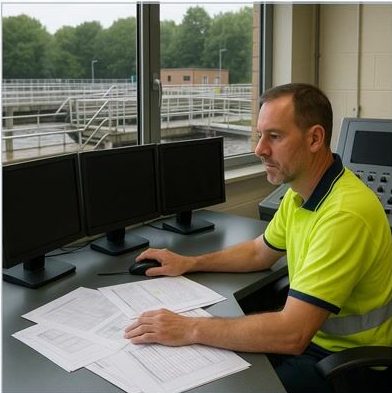
Nitrification: Alkalinity, Cold and Sludge Age
Level 1
Nitrification is fragile, and three things commonly knock it out: alkalinity runs out, the water gets cold, or the sludge age is too short.
Approved for renewal credit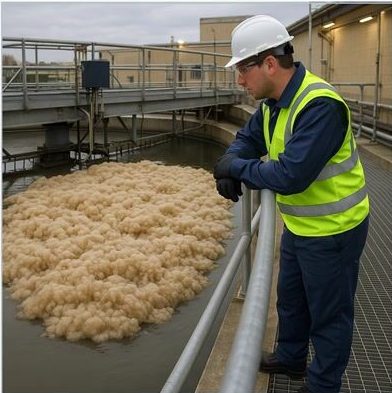
Filamentous Bulking: Cause, Cure and Mistakes
Level 1
When filaments take over, settling fails and solids head for the effluent.
Approved for renewal credit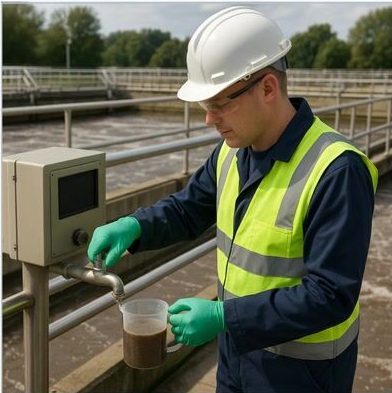
Wasting Rate, Sludge Age and the F/M Lever
Level 1
Operators often struggle to balance wasting rate, sludge age, and the food-to-microorganism (F/M) ratio, leading to unstable or inefficient treatment.
Approved for renewal creditClarifiers & settling3
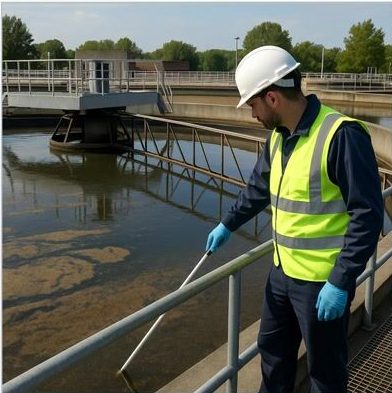
Primary Clarifiers: Withdrawal Rate and Septicity
Level 1
Pump sludge out of the primary too slowly and it turns septic; pump it too fast and you send water to the digester.
Approved for renewal credit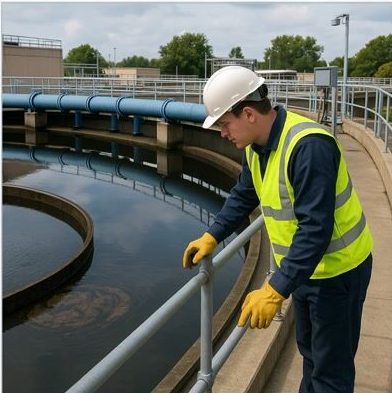
Clarifier Operation and Troubleshooting
Level 1
Clarifiers are where many effluent problems first show.
Approved for renewal credit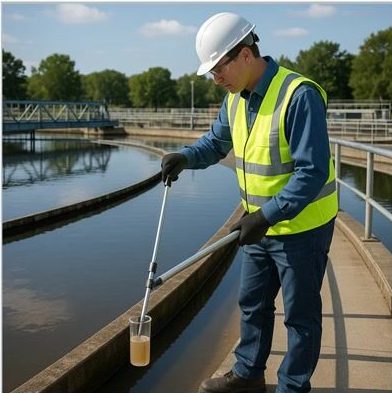
Secondary Clarifier Blanket and RAS Control
Level 1
Let the blanket rise too high and solids go over the weir; pull it too low and the biology suffers.
Approved for renewal creditWet weather, collection & pumps11
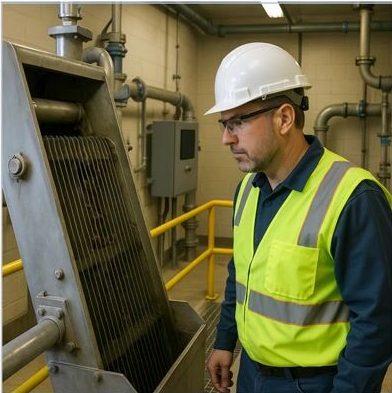
Headworks: What Gets Past Screens and Grit
Level 1
Rags and grit that slip past the headworks show up later as plugged pumps, worn equipment and lost tank volume.
Approved for renewal credit
Infiltration or Inflow: Telling Them Apart
Level 1
Groundwater leaking in and stormwater pouring in look alike at the plant, but they behave differently and have different fixes.
Approved for renewal credit
Protecting the Process Through a Peak Flow
Level 1
A peak flow can wash the biology out of your plant in hours, and it takes weeks to rebuild.
Approved for renewal credit
Wet Weather Operations for Treatment Operators
Level 1
The overview course for storm season: infiltration and inflow, peak flows at the headworks, protecting the biology, and staying in compliance through the surge.
Approved for renewal credit
Storm Modes: What To Switch and When It Is Late
Level 1
Switching modes too late is one of the commonest storm mistakes.
Approved for renewal credit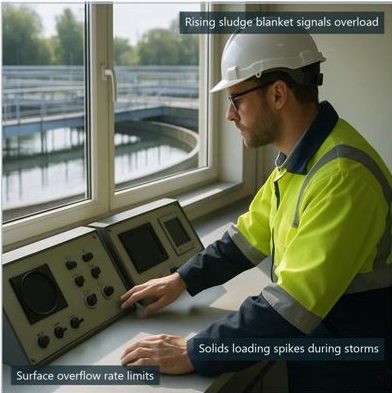
The Baffle That Works and the One That Does Not
Level 1
Wet weather can overload clarifiers, causing solids to wash out and harm biological treatment.
Approved for renewal credit
Solids in the Effluent: Which Failure Is It?
Level 1
Solids in the effluent during wet weather can come from several different failures, and each needs a different fix.
Approved for renewal credit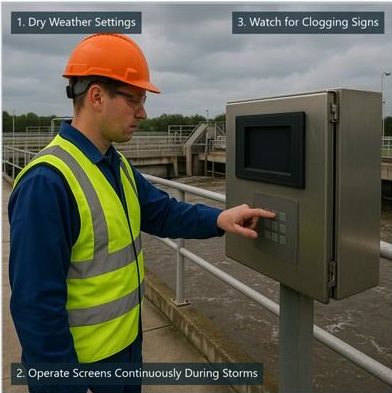
Wet Weather at the Headworks: Grit and Screens
Level 1
In a storm the headworks takes the hit first: screens blind and grit floods in.
Approved for renewal credit
Writing the Wet Weather Operating Plan
Level 1
When the storm arrives is too late to decide who does what.
Approved for renewal credit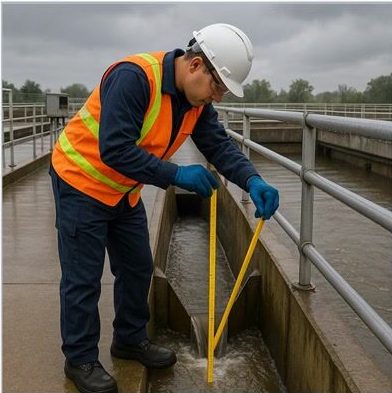
The Flow Number: Contact Time and the Storm DMR
Level 1
In a storm your flow reading and your disinfection contact time are the numbers most likely to be wrong.
Approved for renewal credit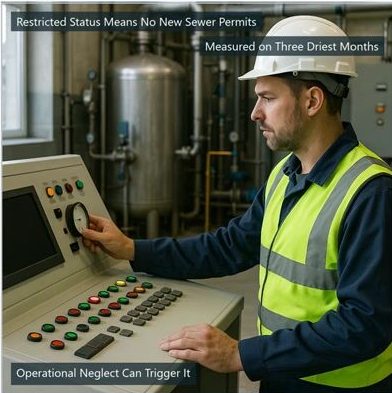
Bypass and Upset: The Defence You Must Prove
Level 1
A bypass or upset is a violation unless you can prove the defense, and the proof is built before and during the event.
Approved for renewal creditPermits, DMRs & compliance5
Reading Your NPDES Permit: What It Actually Asks
Level 1
The big-picture one: what your permit requires, in its numbers and its words, and how those requirements become your monthly DMR.
Approved for renewal credit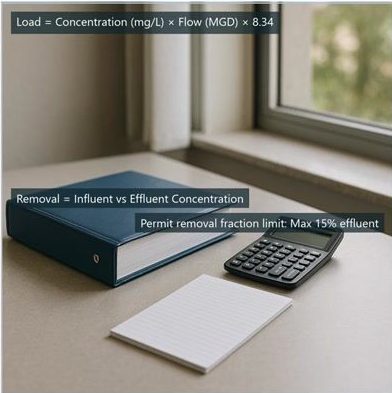
DMR Arithmetic: Loads, Removal and the Flow Term
Level 1
Load and percent-removal calculations go wrong in the same few places every month.
Approved for renewal credit
Why an Ammonia Limit Exists: pH and Temp
Level 1
Ammonia is far more toxic to fish when the water is warm and the pH is high, which is why your limit moves.
Approved for renewal credit
How Illinois Proves a Violation: Averaging
Level 1
In Illinois, whether a result is a violation depends on the averaging period and the multiplier in your permit.
Approved for renewal credit
Limits That Move: Seasons, Floors and Bands
Level 1
Some limits change with the season, some set a minimum, and some are a range.
Approved for renewal creditEmergency response & chemicals2

Standby Power: Proved Under Load, or Not Proved
Level 1
A generator that starts on its weekly test can still fail when it has to carry the plant.
Approved for renewal credit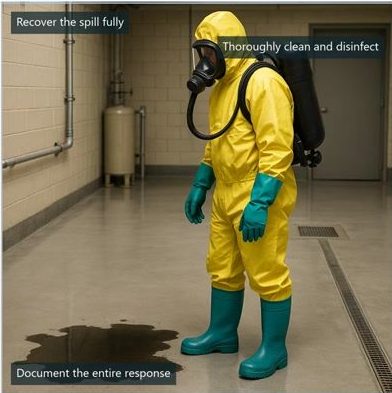
Spill Response Without Causing a Second Release
Level 1
A rushed response to a chemical or sewage spill can cause a second, worse release.
Approved for renewal creditLagoons, ponds & fixed film7
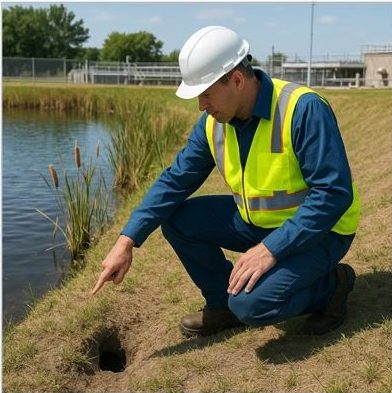
Pond Maintenance: Levees, Weeds and Burrows
Level 1
Weeds, burrowing animals and weak levees are behind many costly pond failures, and all three can be caught early.
Approved for renewal credit
Pond Upsets: Low DO, Odor and Turnover
Level 1
Facultative ponds go wrong in predictable ways: oxygen crashes, odor and seasonal turnover.
Approved for renewal credit
Trickling Filter Arm Speed and Recirculation
Level 1
Distributor arm speed and recirculation are the two main controls on a trickling filter.
Approved for renewal credit
After the Filter: Clarifier, Chlorine and Sludge
Level 1
What comes after a trickling filter or RBC is not run like an activated sludge plant.
Approved for renewal credit
Lagoon Effluent: Flow, Coliform and Chemicals
Level 1
Lagoon effluent brings its own measuring problems.
Approved for renewal credit
Filter Media: Depth, Grading and BOD Credit
Level 1
For trickling filters and RBCs, the media decides how much treatment you get credit for.
Approved for renewal credit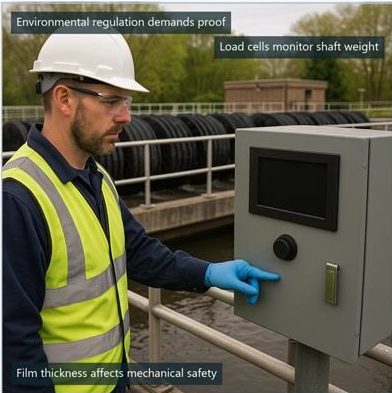
RBCs: Shaft Weight, Film Control and Failure
Level 1
A rotating biological contactor fails when the biofilm gets too heavy for the shaft.
Approved for renewal creditLab, sampling & instruments1
Calibration Records and the Flows Nobody Logs
Level 1
Inspectors ask for calibration records, and the flows that never get logged quietly throw off your numbers.
Approved for renewal creditHydraulics & chemical dosing5
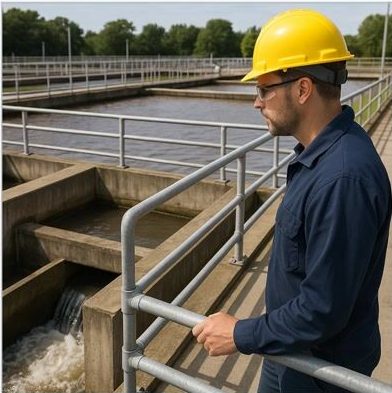
Flow Splitting: Why One Tank Fails First
Level 1
When parallel tanks get unequal flow, one fails while the others coast.
Approved for renewal credit
Hydraulic vs Organic Capacity
Level 1
A plant can be full on flow and have room on load, or the reverse.
Approved for renewal credit
Clarifier Weirs: Loading, Level and Blocks
Level 1
Uneven or blocked weirs let solids escape over one side of the clarifier.
Approved for renewal credit
Chemical Phosphorus Removal: Feed, Floc and Sludge
Level 1
Too little metal salt misses the phosphorus limit, and too much costs money and buries you in sludge.
Approved for renewal credit
The Four Design Flows and What Your Permit Uses
Level 1
Illinois defines four design flows, and your permit uses them in its compliance calculations.
Approved for renewal creditComing soon in Illinois31
Pump Energy: Throttling, Heads and Clean Pipe
Level 1
Pumping more pressure than needed or throttling pumps the wrong way wastes energy and increases costs at wastewater plants.
Pending state approval (Pending)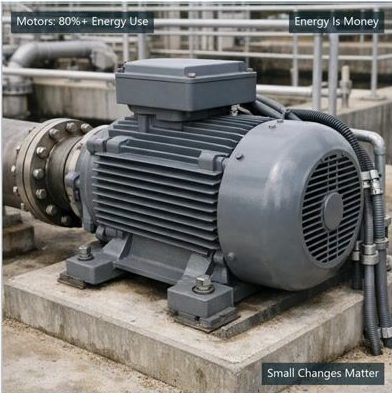
Motors, Nameplates and the Power Bill
Level 1
To equip wastewater operators with a solid practical understanding of motor basics, interpretation of motor nameplates, electrical energy…
Pending state approval (Pending)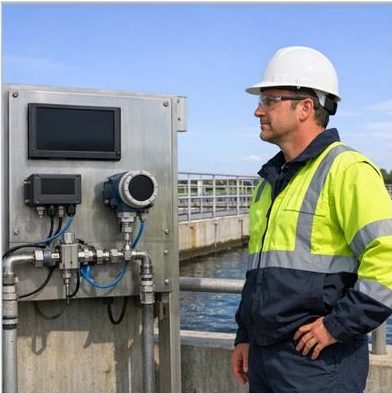
Tracer Testing a Contact Tank: t10 and Baffling
Level 1
Operators often miss hydraulic problems like short-circuiting or slime buildup in contact tanks because they don't know how to run or read tracer tests.
Pending state approval (Pending)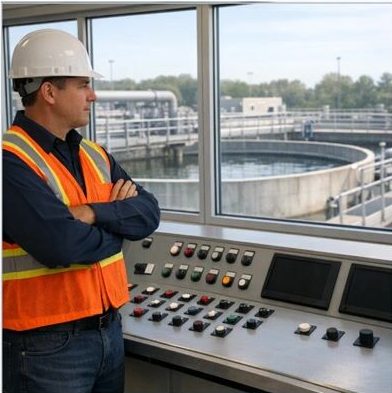
Rounding for Compliance: One Rule, Three Errors
Level 1
Incorrect rounding and arithmetic errors can cause your compliance reports to show violations when there aren't any.
Pending state approval (Pending)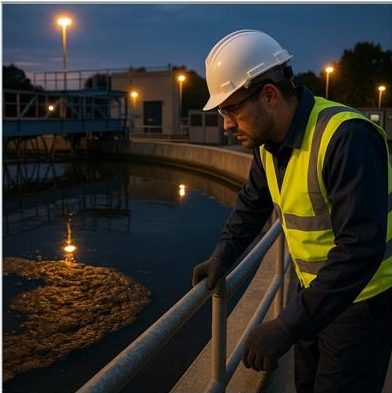
Rising Sludge or Bulking: Telling Them Apart
Level 1
Sludge floating on the clarifier can be rising sludge or bulking, and each needs the opposite fix.
Approved — not yet released for enrollment
Head: What Your Pump Is Really Working Against
Level 1
Pumps often run inefficiently because operators don't fully understand the system pressure and losses they work against.
Pending state approval (Pending)
Digester Gas: CO2, Burners and Stray Methane
Level 1
To equip wastewater operators with practical understanding and skills to manage digester gas quality, ensure burner safety and maintenance, and…
Pending state approval (Pending)
Introduction to Wastewater: Sources, Treatment
Level 1
A plain-language starting point: where wastewater comes from, how a plant treats it, what a permit asks of the plant, and the basics of staying safe on the job.
Approved — not yet released for enrollment
The Daily Round: What To Check and What To Log
Level 1
Operators often miss or misrecord key daily checks and lab data, risking plant performance and regulatory trouble.
Pending state approval (Pending)
Maintenance That Finds Faults, Not Just Grease
Level 1
Just greasing pumps and motors can miss early signs of trouble, leading to unexpected breakdowns and costly repairs.
Pending state approval (Pending)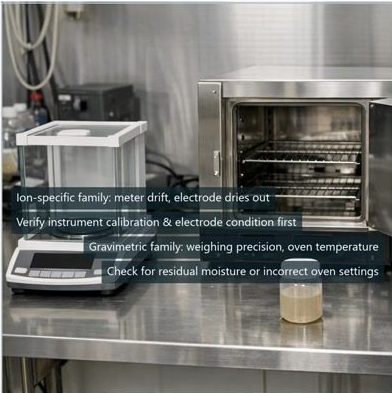
What Each Bench Test Measures, and Its Traps
Level 1
Operators often run bench tests without fully understanding what each one measures or where errors commonly happen, leading to confusing or misleading results.
Pending state approval (Pending)
The Lift Station Is a Flow Control, Not a Pipe
Level 1
To clarify the role of lift stations as flow control devices rather than simple conduits in wet weather wastewater treatment operations, emphasizing…
Pending state approval (Pending)
Calibrating the Plant Flow Meter: the Annual Job
Level 1
Flow meters can drift out of calibration over the year, causing inaccurate flow readings that affect plant compliance and performance.
Pending state approval (Pending)
Who May Touch It: The Electrical Boundary
Level 1
Operators sometimes take on electrical tasks without knowing where the legal and safety lines are, risking injury or code violations.
Pending state approval (Pending)
Insulation Testing: The Megger and the Trend
Level 1
Electric motors and cables can fail unexpectedly if insulation problems aren't spotted early.
Pending state approval (Pending)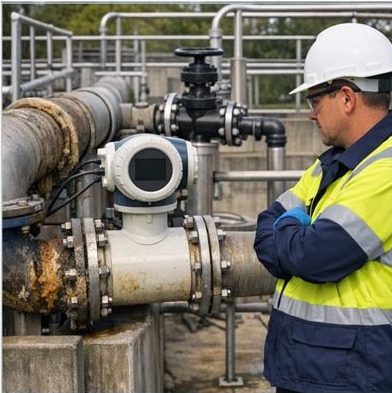
Systematic or Random: Reading a Meter's Errors
Level 1
Mistakes in flow meter readings can come from installation issues like blockage or corrosion, not just the instrument itself.
Pending state approval (Pending)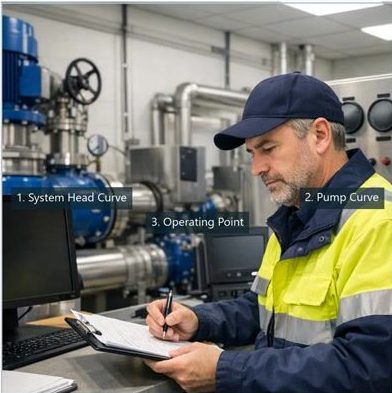
The Operating Point: Reading a Pump Curve
Level 1
To equip wastewater operators with a clear understanding of pump curves, system interaction, pump types, operational mistakes, and practical…
Pending state approval (Pending)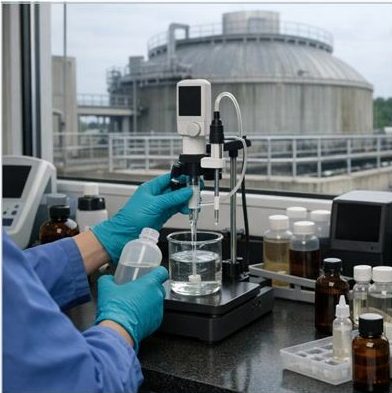
Digester Souring: The Four Numbers and the Cure
Level 1
Digesters can sour without obvious signs, leading to inefficient gas production and costly downtime.
Pending state approval (Pending)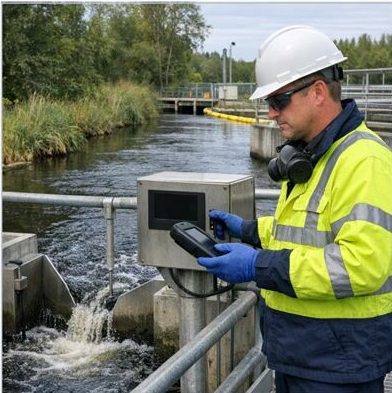
The Approach Is Part of the Calibration
Level 1
To equip wastewater treatment plant operators with a deep understanding of how flow measurement approach conditions affect calibration accuracy…
Pending state approval (Pending)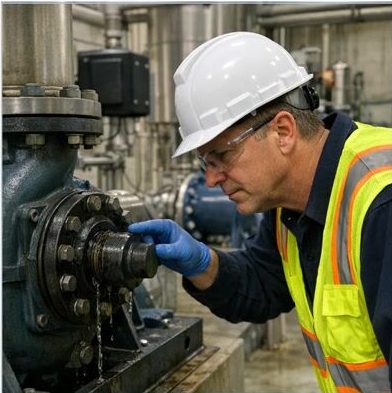
Impellers, Packing and the Pump That Fights You
Level 1
Pumps that run hot, leak, or wear out quickly often have the wrong impeller, bad packing care, or misaligned shafts and pipes.
Pending state approval (Pending)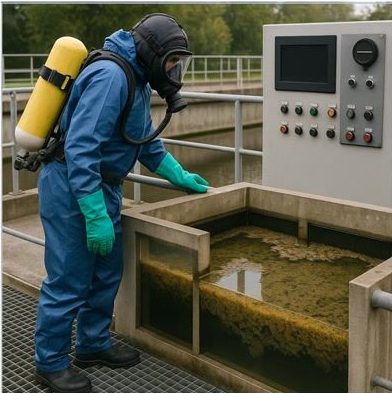
Disinfection CT: Contact Time Is Not Volume/Flow
Level 1
Tank volume divided by flow can overstate your real contact time, because water short-circuits through the tank.
Approved — not yet released for enrollment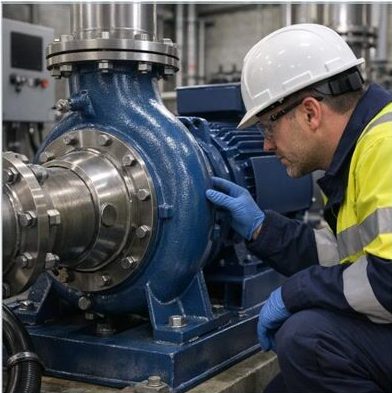
Cavitation, Suction Lift and Priming
Level 1
Pumps can suffer serious damage from cavitation, suction lift problems, or improper priming, leading to costly repairs and downtime.
Pending state approval (Pending)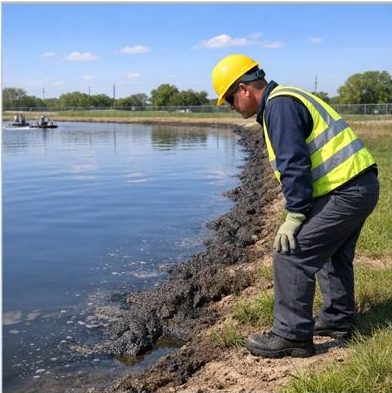
The Lagoon Round: Sludge Depth and the Bottle
Level 1
Operators often struggle with measuring lagoon sludge properly and missing key inspection steps that keep lagoons running smoothly and safely.
Pending state approval (Pending)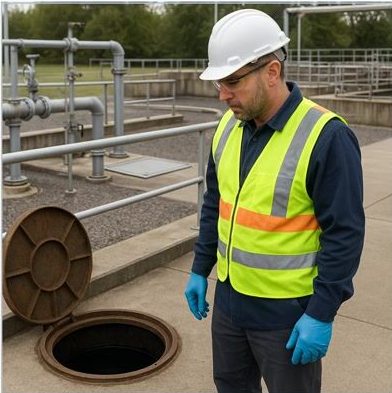
Confined Space Rescue: Why Rescuers Die Too
Level 1
Many confined-space deaths are would-be rescuers who went in after the first victim.
Approved — not yet released for enrollment
Three Field Checks on a Weir or Flume
Level 1
To equip wastewater treatment operators with practical knowledge and field methods to accurately measure flow over weirs or flumes and understand…
Pending state approval (Pending)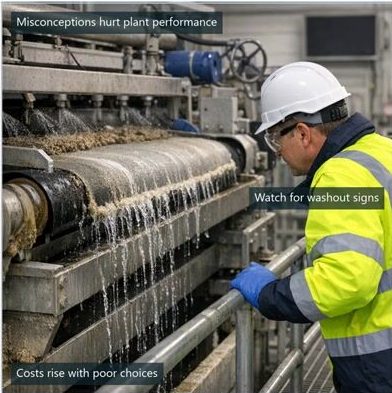
Dewatering: Choosing the Route, Reading the Belt
Level 1
To equip wastewater operators with practical knowledge and decision-making skills for selecting appropriate sludge dewatering routes and optimizing…
Pending state approval (Pending)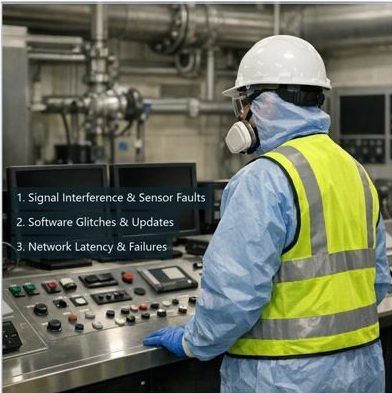
When the Control System Cannot Be Trusted
Level 1
Control system data can be wrong or misleading during failures or cyber incidents, putting plant safety at risk.
Pending state approval (Pending)
Illinois Effluent Standards: Which Rung, Why
Level 1
Illinois sets your effluent limits by a ladder of standards tied to your plant's class.
Approved — not yet released for enrollment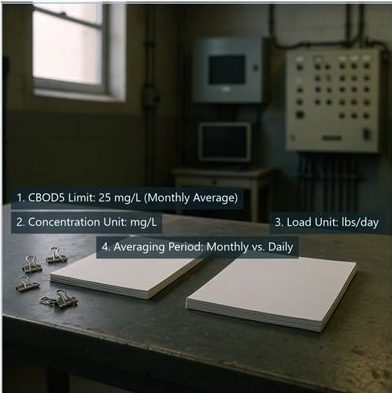
Reading Your NPDES Permit: Rows and Units
Level 1
The detailed one: the rows of limits, the units and averaging periods behind each number, and the load calculations, so the number you report is the number your permit means.
Approved — not yet released for enrollment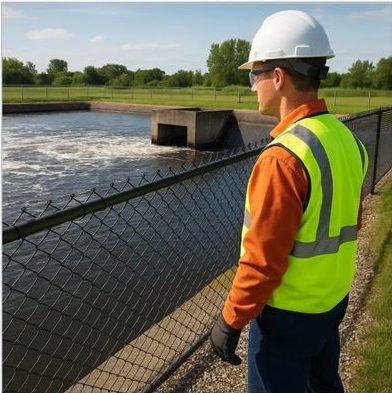
Lagoons: What You Control and What You Inherit
Level 1
In a lagoon system, much of what matters was decided when it was built.
Approved — not yet released for enrollment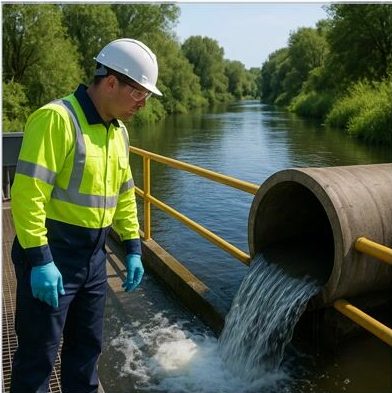
Why Your Plant Has the Limits It Has
Level 1
Every limit in your permit has a reason behind it: the stream, your treatment train and your plant's classification.
Approved — not yet released for enrollmentFor every state
Written so nothing in them changes from one state to the next.
Activated Sludge: Advanced Process Control
Level 1
Troubles with treatment processes often come from misreading key indicators like sludge levels or oxygen readings, leading to wrong adjustments that hurt plant stability.
Approved for renewal creditPrimary Clarifiers: Withdrawal Rate and Septicity
Level 1
Pump sludge out of the primary too slowly and it turns septic; pump it too fast and you send water to the digester.
Approved for renewal creditTreatment Process Fundamentals
Level 1
One connected hour on how a plant works, from headworks and primary clarifiers through activated sludge, secondary clarifiers, nitrification and disinfection.
Approved for renewal creditHeadworks: What Gets Past Screens and Grit
Level 1
Rags and grit that slip past the headworks show up later as plugged pumps, worn equipment and lost tank volume.
Approved for renewal creditClarifier Operation and Troubleshooting
Level 1
Clarifiers are where many effluent problems first show.
Approved for renewal creditInfiltration or Inflow: Telling Them Apart
Level 1
Groundwater leaking in and stormwater pouring in look alike at the plant, but they behave differently and have different fixes.
Approved for renewal creditPond Maintenance: Levees, Weeds and Burrows
Level 1
Weeds, burrowing animals and weak levees are behind many costly pond failures, and all three can be caught early.
Approved for renewal creditActivated Sludge Process Control
Level 1
To equip wastewater operators with a thorough understanding of activated sludge process control, emphasizing operational levers, common pitfalls…
Approved for renewal creditProtecting the Process Through a Peak Flow
Level 1
A peak flow can wash the biology out of your plant in hours, and it takes weeks to rebuild.
Approved for renewal creditStandby Power: Proved Under Load, or Not Proved
Level 1
A generator that starts on its weekly test can still fail when it has to carry the plant.
Approved for renewal creditHydrogen Sulfide: Four Numbers, One Ceiling
Level 1
To equip wastewater operators with a thorough understanding of hydrogen sulfide (H2S) hazards, exposure limits, and safe operating practices to…
Approved for renewal creditNitrification: Alkalinity, Cold and Sludge Age
Level 1
Nitrification is fragile, and three things commonly knock it out: alkalinity runs out, the water gets cold, or the sludge age is too short.
Approved for renewal creditWet Weather Operations for Treatment Operators
Level 1
The overview course for storm season: infiltration and inflow, peak flows at the headworks, protecting the biology, and staying in compliance through the surge.
Approved for renewal creditStorm Modes: What To Switch and When It Is Late
Level 1
Switching modes too late is one of the commonest storm mistakes.
Approved for renewal creditThe Baffle That Works and the One That Does Not
Level 1
Wet weather can overload clarifiers, causing solids to wash out and harm biological treatment.
Approved for renewal creditSolids in the Effluent: Which Failure Is It?
Level 1
Solids in the effluent during wet weather can come from several different failures, and each needs a different fix.
Approved for renewal creditReading Your NPDES Permit: What It Actually Asks
Level 1
The big-picture one: what your permit requires, in its numbers and its words, and how those requirements become your monthly DMR.
Approved for renewal creditFlow Splitting: Why One Tank Fails First
Level 1
When parallel tanks get unequal flow, one fails while the others coast.
Approved for renewal creditPond Upsets: Low DO, Odor and Turnover
Level 1
Facultative ponds go wrong in predictable ways: oxygen crashes, odor and seasonal turnover.
Approved for renewal creditFilamentous Bulking: Cause, Cure and Mistakes
Level 1
When filaments take over, settling fails and solids head for the effluent.
Approved for renewal creditWet Weather at the Headworks: Grit and Screens
Level 1
In a storm the headworks takes the hit first: screens blind and grit floods in.
Approved for renewal creditWriting the Wet Weather Operating Plan
Level 1
When the storm arrives is too late to decide who does what.
Approved for renewal creditWasting Rate, Sludge Age and the F/M Lever
Level 1
Operators often struggle to balance wasting rate, sludge age, and the food-to-microorganism (F/M) ratio, leading to unstable or inefficient treatment.
Approved for renewal creditIllinois rules & reporting
These courses teach Illinois's own regulations, so they are offered for Illinois only.
Trickling Filter Arm Speed and Recirculation
Level 1
Distributor arm speed and recirculation are the two main controls on a trickling filter.
Approved for renewal creditHydraulic vs Organic Capacity
Level 1
A plant can be full on flow and have room on load, or the reverse.
Approved for renewal creditDMR Arithmetic: Loads, Removal and the Flow Term
Level 1
Load and percent-removal calculations go wrong in the same few places every month.
Approved for renewal creditClarifier Weirs: Loading, Level and Blocks
Level 1
Uneven or blocked weirs let solids escape over one side of the clarifier.
Approved for renewal creditWhy an Ammonia Limit Exists: pH and Temp
Level 1
Ammonia is far more toxic to fish when the water is warm and the pH is high, which is why your limit moves.
Approved for renewal creditThe Flow Number: Contact Time and the Storm DMR
Level 1
In a storm your flow reading and your disinfection contact time are the numbers most likely to be wrong.
Approved for renewal creditAfter the Filter: Clarifier, Chlorine and Sludge
Level 1
What comes after a trickling filter or RBC is not run like an activated sludge plant.
Approved for renewal creditChemical Phosphorus Removal: Feed, Floc and Sludge
Level 1
Too little metal salt misses the phosphorus limit, and too much costs money and buries you in sludge.
Approved for renewal creditHow Illinois Proves a Violation: Averaging
Level 1
In Illinois, whether a result is a violation depends on the averaging period and the multiplier in your permit.
Approved for renewal creditSecondary Clarifier Blanket and RAS Control
Level 1
Let the blanket rise too high and solids go over the weir; pull it too low and the biology suffers.
Approved for renewal creditSpill Response Without Causing a Second Release
Level 1
A rushed response to a chemical or sewage spill can cause a second, worse release.
Approved for renewal creditLimits That Move: Seasons, Floors and Bands
Level 1
Some limits change with the season, some set a minimum, and some are a range.
Approved for renewal creditThe Four Design Flows and What Your Permit Uses
Level 1
Illinois defines four design flows, and your permit uses them in its compliance calculations.
Approved for renewal creditLagoon Effluent: Flow, Coliform and Chemicals
Level 1
Lagoon effluent brings its own measuring problems.
Approved for renewal creditFilter Media: Depth, Grading and BOD Credit
Level 1
For trickling filters and RBCs, the media decides how much treatment you get credit for.
Approved for renewal creditRBCs: Shaft Weight, Film Control and Failure
Level 1
A rotating biological contactor fails when the biofilm gets too heavy for the shaft.
Approved for renewal creditCalibration Records and the Flows Nobody Logs
Level 1
Inspectors ask for calibration records, and the flows that never get logged quietly throw off your numbers.
Approved for renewal creditBypass and Upset: The Defence You Must Prove
Level 1
A bypass or upset is a violation unless you can prove the defense, and the proof is built before and during the event.
Approved for renewal creditComing soon in Illinois
Built and waiting on a final review or the state's approval. Ask to be told the day one opens.
Pump Energy: Throttling, Heads and Clean Pipe
Level 1
Pumping more pressure than needed or throttling pumps the wrong way wastes energy and increases costs at wastewater plants.
Pending state approval (Pending)Motors, Nameplates and the Power Bill
Level 1
To equip wastewater operators with a solid practical understanding of motor basics, interpretation of motor nameplates, electrical energy…
Pending state approval (Pending)Tracer Testing a Contact Tank: t10 and Baffling
Level 1
Operators often miss hydraulic problems like short-circuiting or slime buildup in contact tanks because they don't know how to run or read tracer tests.
Pending state approval (Pending)Rounding for Compliance: One Rule, Three Errors
Level 1
Incorrect rounding and arithmetic errors can cause your compliance reports to show violations when there aren't any.
Pending state approval (Pending)Rising Sludge or Bulking: Telling Them Apart
Level 1
Sludge floating on the clarifier can be rising sludge or bulking, and each needs the opposite fix.
Approved — not yet released for enrollmentHead: What Your Pump Is Really Working Against
Level 1
Pumps often run inefficiently because operators don't fully understand the system pressure and losses they work against.
Pending state approval (Pending)Digester Gas: CO2, Burners and Stray Methane
Level 1
To equip wastewater operators with practical understanding and skills to manage digester gas quality, ensure burner safety and maintenance, and…
Pending state approval (Pending)Introduction to Wastewater: Sources, Treatment
Level 1
A plain-language starting point: where wastewater comes from, how a plant treats it, what a permit asks of the plant, and the basics of staying safe on the job.
Approved — not yet released for enrollmentThe Daily Round: What To Check and What To Log
Level 1
Operators often miss or misrecord key daily checks and lab data, risking plant performance and regulatory trouble.
Pending state approval (Pending)Maintenance That Finds Faults, Not Just Grease
Level 1
Just greasing pumps and motors can miss early signs of trouble, leading to unexpected breakdowns and costly repairs.
Pending state approval (Pending)What Each Bench Test Measures, and Its Traps
Level 1
Operators often run bench tests without fully understanding what each one measures or where errors commonly happen, leading to confusing or misleading results.
Pending state approval (Pending)The Lift Station Is a Flow Control, Not a Pipe
Level 1
To clarify the role of lift stations as flow control devices rather than simple conduits in wet weather wastewater treatment operations, emphasizing…
Pending state approval (Pending)Calibrating the Plant Flow Meter: the Annual Job
Level 1
Flow meters can drift out of calibration over the year, causing inaccurate flow readings that affect plant compliance and performance.
Pending state approval (Pending)Who May Touch It: The Electrical Boundary
Level 1
Operators sometimes take on electrical tasks without knowing where the legal and safety lines are, risking injury or code violations.
Pending state approval (Pending)Insulation Testing: The Megger and the Trend
Level 1
Electric motors and cables can fail unexpectedly if insulation problems aren't spotted early.
Pending state approval (Pending)Systematic or Random: Reading a Meter's Errors
Level 1
Mistakes in flow meter readings can come from installation issues like blockage or corrosion, not just the instrument itself.
Pending state approval (Pending)The Operating Point: Reading a Pump Curve
Level 1
To equip wastewater operators with a clear understanding of pump curves, system interaction, pump types, operational mistakes, and practical…
Pending state approval (Pending)Digester Souring: The Four Numbers and the Cure
Level 1
Digesters can sour without obvious signs, leading to inefficient gas production and costly downtime.
Pending state approval (Pending)The Approach Is Part of the Calibration
Level 1
To equip wastewater treatment plant operators with a deep understanding of how flow measurement approach conditions affect calibration accuracy…
Pending state approval (Pending)Impellers, Packing and the Pump That Fights You
Level 1
Pumps that run hot, leak, or wear out quickly often have the wrong impeller, bad packing care, or misaligned shafts and pipes.
Pending state approval (Pending)Disinfection CT: Contact Time Is Not Volume/Flow
Level 1
Tank volume divided by flow can overstate your real contact time, because water short-circuits through the tank.
Approved — not yet released for enrollmentCavitation, Suction Lift and Priming
Level 1
Pumps can suffer serious damage from cavitation, suction lift problems, or improper priming, leading to costly repairs and downtime.
Pending state approval (Pending)The Lagoon Round: Sludge Depth and the Bottle
Level 1
Operators often struggle with measuring lagoon sludge properly and missing key inspection steps that keep lagoons running smoothly and safely.
Pending state approval (Pending)Confined Space Rescue: Why Rescuers Die Too
Level 1
Many confined-space deaths are would-be rescuers who went in after the first victim.
Approved — not yet released for enrollmentThree Field Checks on a Weir or Flume
Level 1
To equip wastewater treatment operators with practical knowledge and field methods to accurately measure flow over weirs or flumes and understand…
Pending state approval (Pending)Dewatering: Choosing the Route, Reading the Belt
Level 1
To equip wastewater operators with practical knowledge and decision-making skills for selecting appropriate sludge dewatering routes and optimizing…
Pending state approval (Pending)When the Control System Cannot Be Trusted
Level 1
Control system data can be wrong or misleading during failures or cyber incidents, putting plant safety at risk.
Pending state approval (Pending)Illinois Effluent Standards: Which Rung, Why
Level 1
Illinois sets your effluent limits by a ladder of standards tied to your plant's class.
Approved — not yet released for enrollmentReading Your NPDES Permit: Rows and Units
Level 1
The detailed one: the rows of limits, the units and averaging periods behind each number, and the load calculations, so the number you report is the number your permit means.
Approved — not yet released for enrollmentLagoons: What You Control and What You Inherit
Level 1
In a lagoon system, much of what matters was decided when it was built.
Approved — not yet released for enrollmentWhy Your Plant Has the Limits It Has
Level 1
Every limit in your permit has a reason behind it: the stream, your treatment train and your plant's classification.
Approved — not yet released for enrollmentNot seeing what you need?
Tell us the subject and we will add it to the list. What operators ask for is how we decide what to build next.